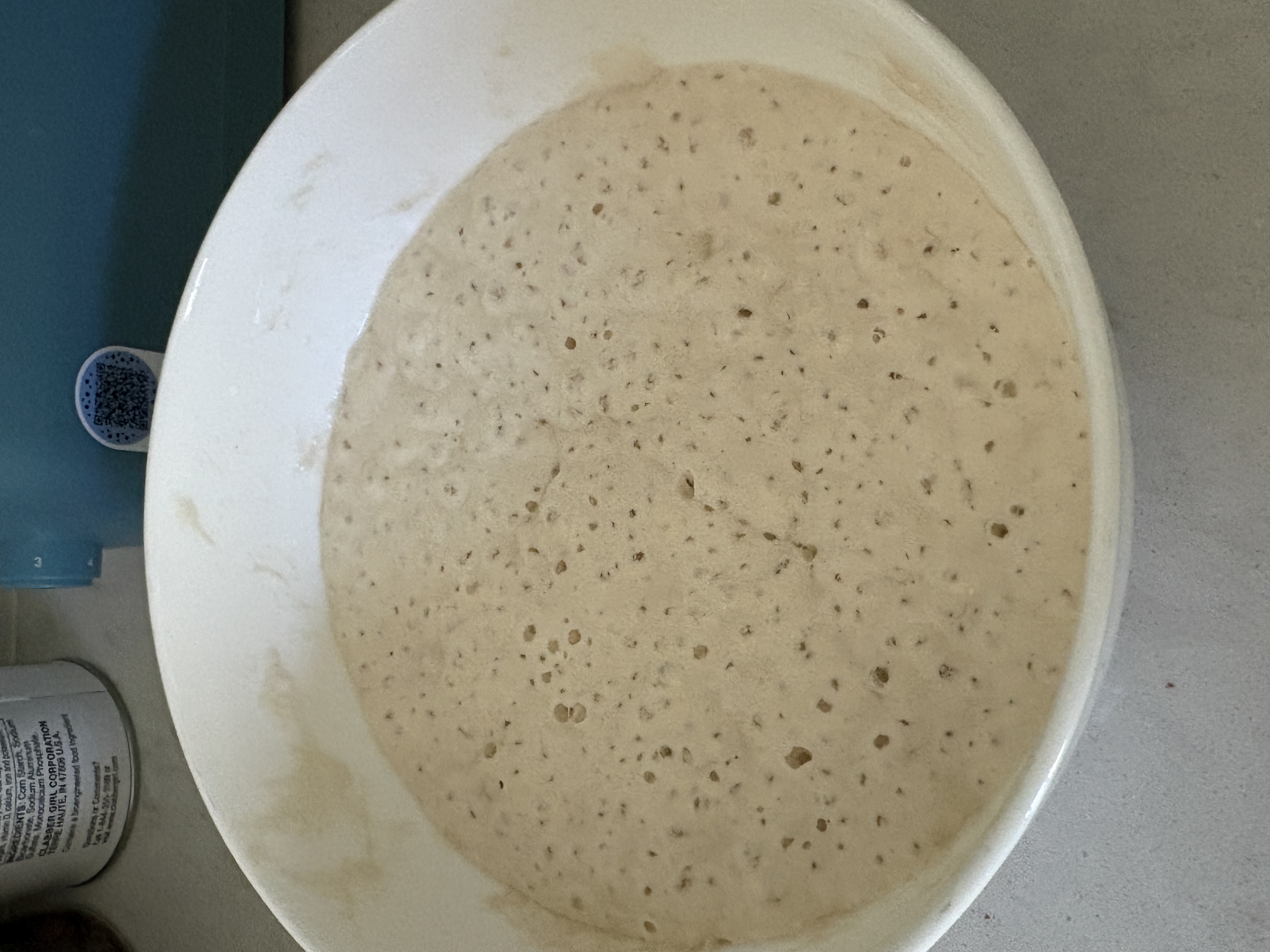
Fridge Starter Refresh: Dilute Acid, Don't Add More
Why a 5-day cold jar stalls at 1:1, and how to wake it with dilution, warm water, and peak timing
Quick rule: After 4–7 days in the fridge, seed a levain at 1:2 or 1:3 (starter : flour : water), use warm water so the mix lands around 78–80°F (25–27°C), and wait for peak volume before you mix dough. More cold starter is not faster.
The intuition trap
If you want a levain ready sooner, it feels logical to seed heavier: 1:1 instead of 1:2. More culture should mean more yeast, right?
With a fresh, recently fed starter, that instinct can work. With a jar that sat cold for five days, it often does the opposite. You carry over more acid and more thermal mass, and yeast stalls while bacteria keep winning.
When a cold jar is risky
Treat a fridge jar as “needs a careful refresh” when any of these show up:
- 4+ days since the last feed (5–7 days is the classic trap)
- A sharp, vinegary smell or a layer of hooch on top
- Flat surface after a room-temp feed that used to double on schedule
- You plan to seed dough the same day with no room-temp buildup
Cold storage is great for maintenance (see Starter Maintenance). It is a poor direct seed for a same-day bake when the culture is acid-heavy and dormant.
Why 1:1 slows you down
In the fridge, acetic acid and metabolic waste keep accumulating while yeast mostly sleeps.
- 1:2 (e.g. 25g starter + 50g flour + 50g water): fresh flour and water dilute that acid and nudge pH back toward the yeast-friendly zone (~5.0–5.5).
- 1:1 (e.g. 50g starter + 50g flour + 50g water): you carry roughly double the acid into the new mix. Yeast stays suppressed from minute one.
If the jar is especially sharp or old, go even leaner at 1:3. You want dilution, not inoculation bravado.
Warm water beats more starter
Cold starter has real thermal mass. At 1:1, half your seed mix can be sitting near fridge temperature (~38°F / 3°C). That drags the final levain temperature down unless you compensate.
Use water around 85–90°F (30–32°C) so the mixed levain lands near 78–80°F (25–27°C). Warmth wakes dormant yeast far faster than sheer starter mass ever will. Below ~60°F, yeast crawls while acid-tolerant bacteria keep working.
1 Prefer one room-temp refresh first
Best practice when the jar has been cold for several days: discard most of it, keep a small seed, and run one full room-temp feed before you build your bake levain.
Example flush feed: 10g cold starter + 30g water + 30g flour (1:3:3). Cover loosely, leave at room temp until it doubles (or triples) and domes. That flush clears acid and rebuilds yeast numbers. Then build your recipe levain from that active culture.
2 Same-day shortcut (when you must bake today)
- Seed at 1:2 or 1:3, not 1:1.
- Use warm water so the mix hits ~78–80°F.
- Wait for peak volume (double/triple + dome), not a fixed clock time.
- Only then mix dough. A peaked levain beats a heavy but sleepy seed every time.
Peak before mix
Do not judge readiness by hours alone. Look for volume increase, a domed top, and a network of bubbles when you tip the jar. If it has not peaked, give it more time or start a leaner refresh rather than dumping a flat, acidic mix into your dough.
That same lesson showed up in the journal bake that inspired this guide: cold seed plus a short warm bulk produced sharp sourness with almost no rise. Equipment was not the bottleneck. Starter vitality was.
From the journal
I learned this after a flat, intensely sour loaf seeded straight from a 5-day fridge jar. Full story: All Acid, No Rise: The Cold Proof Trap.
What to take into the next bake
- Cold jar (4+ days): dilute at 1:2 or 1:3. Do not “speed up” with 1:1.
- Warm the water so the levain lands near 78–80°F.
- When you can, run one room-temp flush feed before the bake levain.
- Mix dough only after the levain peaks.
For routine fridge storage and weekly feeding, keep using the small-jar method in Sourdough Starter Maintenance. For building a starter from scratch, see How to Build a Sourdough Starter.